The U-shaped toothbrush looks almost too simple. You slide it in, press a button, and it vibrates or spins while your kid stands there (sometimes) without the usual brushing battle. But results depend on how you use it - and on whether it actually fits your child’s mouth.
If you’re using a U-shaped brush because mornings are rushed, bedtime is chaos, or your child hates a regular brush, you’re in the right place. Here’s the practical, parent-tested way to get the most out of it.
What a U-shaped toothbrush actually does (and doesn’t)
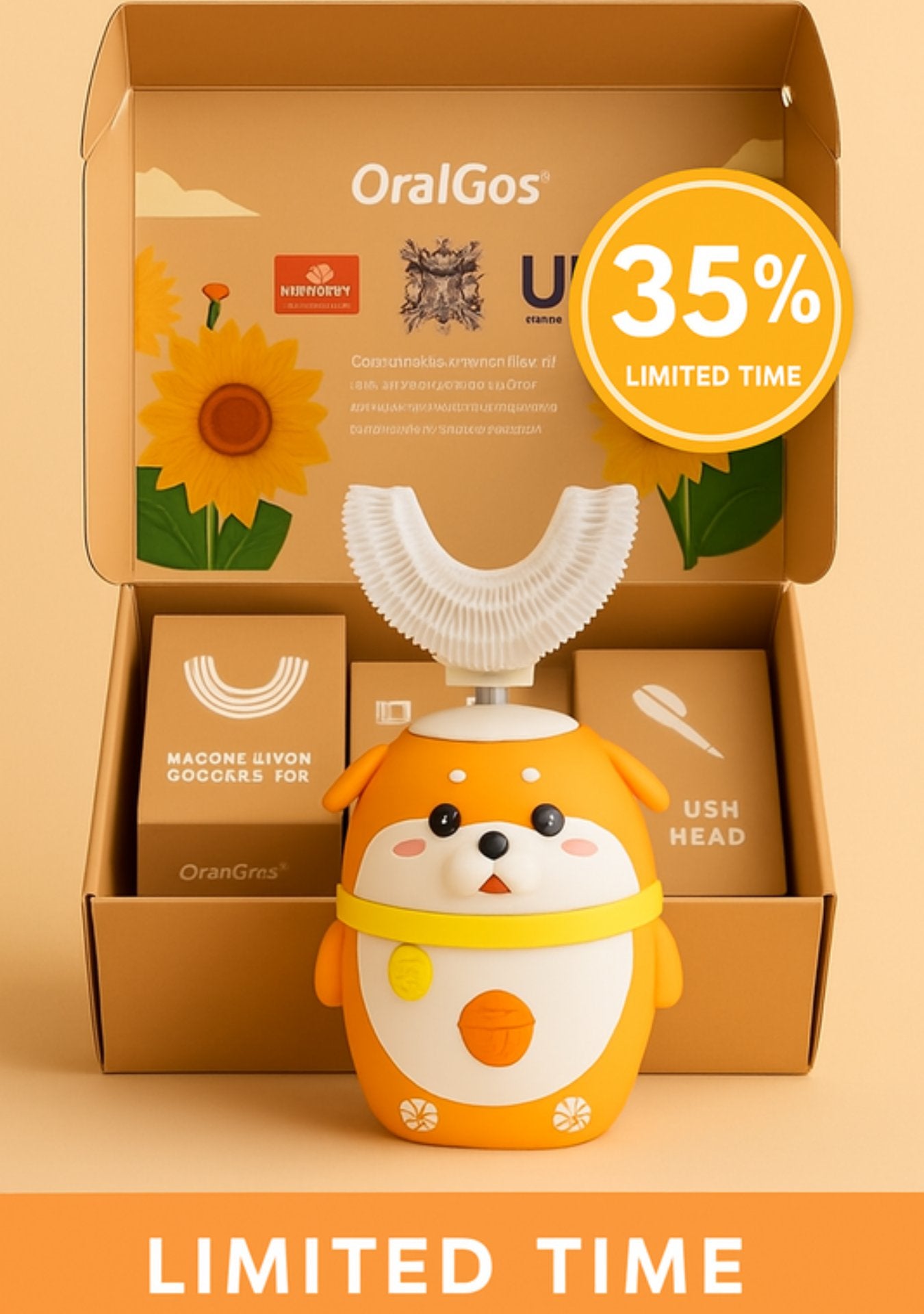
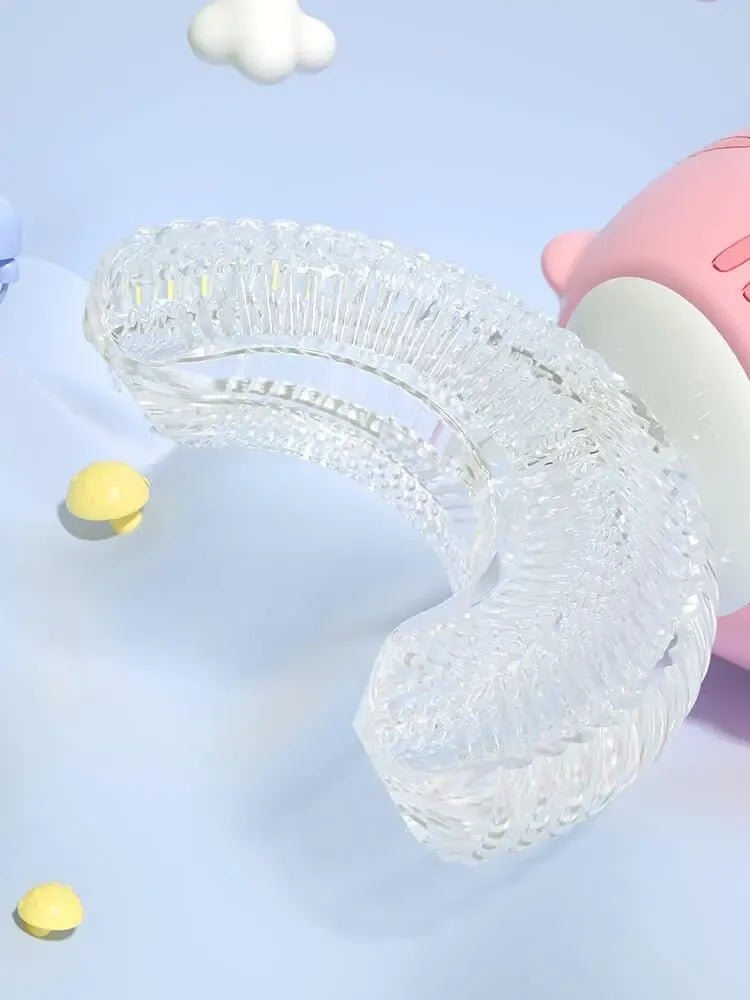
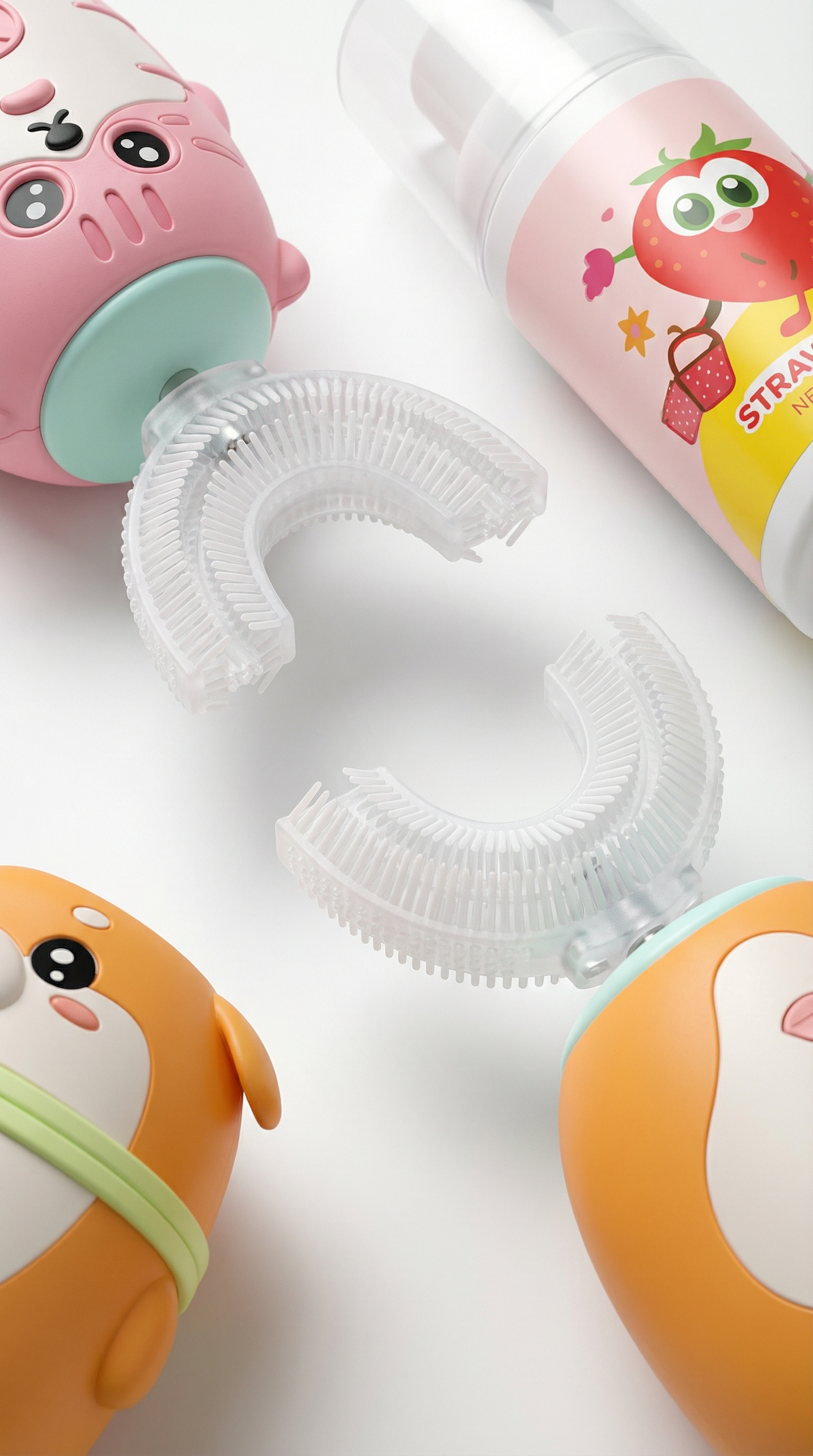
A U-shaped toothbrush has bristles arranged along a silicone or plastic mouthpiece shaped like a horseshoe. Instead of brushing each tooth surface one by one, the idea is to clean many teeth at once as the brush vibrates.
What it does well: it can make brushing faster, easier to tolerate, and more consistent for kids who resist a standard brush. It also helps some families keep a routine when attention spans are short.
What it doesn’t magically do: replace technique and supervision. A U-shaped brush is not a free pass to stop checking coverage, toothpaste amount, or whether gumlines are getting attention. Think of it as a routine helper, not a dentist-in-a-mouthpiece.
How to use u shaped toothbrush step by step
The biggest mistake is treating it like a pacifier: pop it in and hope for the best. A few small habits make a big difference.
1) Choose the right size and check the fit
Fit matters more with a U-shaped brush than with a standard brush. If the mouthpiece is too big, it won’t contact the teeth evenly. Too small, and it can miss the back molars or press uncomfortably on gums.
You want snug contact on both the outer and inner tooth surfaces when the child bites down gently. If you see obvious gaps on one side or the brush sits crooked, you’re not getting even cleaning.
2) Rinse the mouthpiece first
Quick rinse under water removes dust and helps toothpaste spread more smoothly across the bristles. It also makes the first few seconds feel less “weird” for kids who are sensitive to texture.
3) Add the right amount of toothpaste (less than you think)
Most parents overload the mouthpiece. With a U-shaped brush, extra toothpaste tends to foam up fast and trigger gagging or messy drips.
For kids under 3, use a smear about the size of a grain of rice. For ages 3-6, use a pea-sized amount. For older kids who can reliably spit, you can use a little more, but you still don’t need to fill the U.
Spread it lightly across the bristles with a clean finger or by pressing the mouthpiece gently against closed lips and moving it a little. The goal is thin coverage, not a mound of paste.
4) Position it correctly before turning it on
Have your child open their mouth, place the U-shaped mouthpiece over the teeth, then ask them to bite down softly. “Soft bite” is key - clenching can be uncomfortable and can reduce the bristles’ ability to flex along the gumline.
Make sure it’s centered: the middle of the U should align with the front teeth. If the brush is shifted left or right, one side gets more contact than the other.
5) Turn it on and guide the motion (yes, there’s still motion)
Even though it’s designed to brush many teeth at once, a small amount of guiding helps reach the gumline and back teeth.
Keep the brush running for the full cycle (or about 30-60 seconds depending on the model). While it vibrates, gently tilt the handle up and down a few degrees so the bristles touch closer to the gumline, then slightly toward the biting surfaces. You’re not scrubbing - you’re changing the angle so the bristles make better contact.
If your child has back molars (most do by age 6-7), do a quick “back check.” Some U-mouthpieces don’t hug the last molars well, especially in wider mouths. If you suspect the back teeth are being missed, you can run one more short cycle with the mouthpiece positioned a touch farther back, or follow with a few seconds of a regular brush on the last molars.
6) Spit, rinse, and do a quick visual check
Have your child spit. Then do a fast look at the gumline around the front teeth and the back molars. You’re looking for visible toothpaste residue stuck near the gums (a sign it didn’t get agitated enough) and for obvious misses at the back.
This takes 10 seconds and is the difference between “we brushed” and “we cleaned.”
Timing: how long should you use it?
Most families buy a U-shaped toothbrush for speed, so let’s be realistic. If your child tolerates it, aim for the equivalent of two minutes per day total: one minute in the morning and one minute at night, or longer at night if you need to choose.
If your brush has a built-in timer, use it. If it doesn’t, count slowly to 40-60 for one cycle. Consistency beats perfection, especially with kids.
Kids, toddlers, and “bite and run” behavior
Toddlers love to bite the mouthpiece, chew it, then try to walk away. That’s normal.
Set the expectation before you start: “Bite softly until the buzzing stops.” Make it a simple rule. For younger kids, it also helps to give them a job, like holding a small cup for rinsing. Busy hands reduce wandering.
If gagging happens, it’s usually one of three things: too much toothpaste, the mouthpiece is too big, or the child is pushing it too far back. Reduce paste first, then re-check sizing and placement.
How to get better results (the trade-offs parents should know)
U-shaped brushes can be great for compliance. The trade-off is that they may not clean as precisely along the gumline and between teeth as a careful manual or standard electric brush.
That doesn’t mean they’re “bad.” It means you should pair them with smart habits:
- Make nighttime brushing the most thorough session. If you only have energy for one “perfect” brush, do it before bed.
-
Add flossing when teeth touch. Even a few nights per week helps a lot. If flossing is a daily fight, start with the tightest contact points (often back molars) rather than trying to do every space.
- Consider a quick follow-up on problem areas. If your child gets plaque behind the lower front teeth or you’ve been told to watch the back molars, do 10-20 seconds with a regular brush there.
If your child has braces, dental appliances, or specific sensitivity issues, it depends. Some U-shaped designs won’t fit well around appliances, and a dentist may prefer a conventional brush for controlled cleaning. When in doubt, take the brush to your next checkup and ask for an opinion based on your child’s mouth.
Cleaning and care: keep the mouthpiece hygienic
A U-shaped brush sits in a warm, wet environment. If you don’t clean it properly, it can start to smell or grow buildup.
After each use, rinse thoroughly and shake off excess water. Let it air-dry upright in a ventilated spot, not sealed in a travel case.
A couple times per week, wash the mouthpiece with mild soap and warm water, then rinse well. If the brush is designed with a removable mouthpiece, take it off occasionally to clean around the base where water can hide.
Replace the mouthpiece or head when bristles look flattened, the silicone looks cloudy or torn, or you can’t get rid of odor. For many families, that ends up being every 2-3 months, similar to a standard brush head, but heavy chewers may need replacement sooner.
Common mistakes (and quick fixes)
If you’re not seeing the “fresh mouth” feeling, one of these is usually the reason.
Using the wrong size is the biggest issue. An uneven fit gives uneven cleaning.
Using too much toothpaste is the mess-maker and gag trigger. Less paste, better tolerance.
Skipping supervision is the silent failure. Kids will do a 5-second buzz and claim victory. Stand there, watch the timer, and do the 10-second back-molar check.
Assuming it replaces flossing is another one. No brush - U-shaped or not - reliably cleans between tight teeth.
When a U-shaped toothbrush is a great choice
It’s a strong option for kids who fight brushing, kids with sensory sensitivity who hate bristles scraping, and families who need a routine that can survive travel, late nights, and school mornings.
It’s also helpful as a stepping-stone. Some kids start with U-shaped brushing to build the habit, then transition to a standard electric brush as they get older and more cooperative. That’s a win.
If you’re shopping for one from a curated, tested selection built for busy households, TipTop360 keeps family routines in mind with practical kids dental picks at https://www.tiptop360.com.
A quick note on expectations
A U-shaped toothbrush is at its best when you treat it like a system: correct size, thin toothpaste layer, full cycle time, and a parent doing quick checks. Done that way, it can take brushing from daily conflict to something that actually happens - consistently.
Closing thought: the “right” toothbrush is the one your child will use twice a day without drama, while you quietly make sure it’s doing its job.