Cart
0
Every parent knows the moment: you ask for two minutes of brushing and it turns into a 12-second swish, a negotiation, and toothpaste on the mirror. The right kids electric toothbrush reduces friction. Less arguing, more consistency, and fewer "Did you actually brush?" doubts.
But "best" is not one universal model. The best kids electric toothbrush is the one your child will actually use correctly, twice a day, with minimal supervision. That depends on age, mouth size, sensory preferences, and how much help you want the brush to provide.
This guide covers everything UAE parents need: brush types, age-by-age selection, U-shaped toothbrush how-to, replacement heads, dental bundles, toddler routines, and honest trade-offs so you can pick confidently and stop second-guessing.
What is the best kids electric toothbrush? It depends on age and behavior
If you searched "best kids electric toothbrush" you are trying to skip endless scrolling and get to a confident buy. The honest answer: the best choice changes by stage.
For a cooperative 8- to 12-year-old with decent technique, a classic kids oscillating-rotating or sonic brush with a small head is a great long-term pick. For a 3- to 6-year-old who fights brushing or cannot coordinate angles, a guided-format brush including U-shaped styles can make the routine easier. For sensory-sensitive kids, the "best" may simply be the quietest, softest option that does not feel like a power tool.
What matters most is matching the brush to your child's reality, not your ideal routine.
The real decision: what problem are you solving?
Parents usually buy a kids electric toothbrush for one of four reasons, and your reason should drive the features you pay for.
If your main issue is speed and compliance, you want something that makes the routine feel shorter, simpler, and more predictable: timers, lights, or a format that reduces technique demands.
If your main issue is plaque and brushing quality, you want consistent motion, soft bristles, and a head size that can reach back molars without gagging.
If your main issue is independence, you want a brush that guides duration and coverage so you can step back while feeling confident.
If your main issue is travel and convenience, you want long battery life, easy charging, and replacement heads you can actually get again.
Once you name your problem, the "best" category becomes obvious.
Kids electric toothbrush types and who each one fits
Most kids electric toothbrushes fall into three buckets. They all can work, but they are not interchangeable.
Oscillating-rotating (round head)
This is the style many dentists recommend for plaque control because the small round head targets one tooth at a time. For kids who can tolerate the feel and will let you guide the brush along the gumline, it is a strong performer.
Trade-off: it can feel tickly or intense for some kids, and younger kids may "paint" the front teeth only unless you supervise.
Sonic (vibrating, oval head)
Sonic brushes use high-frequency vibrations and usually have a more traditional-looking brush head. Some kids prefer the feel. It can be gentler and quieter depending on the model.
Trade-off: technique still matters. If your child rushes, a sonic brush will not magically reach every surface.
U-shaped electric toothbrushes (mouthpiece style)
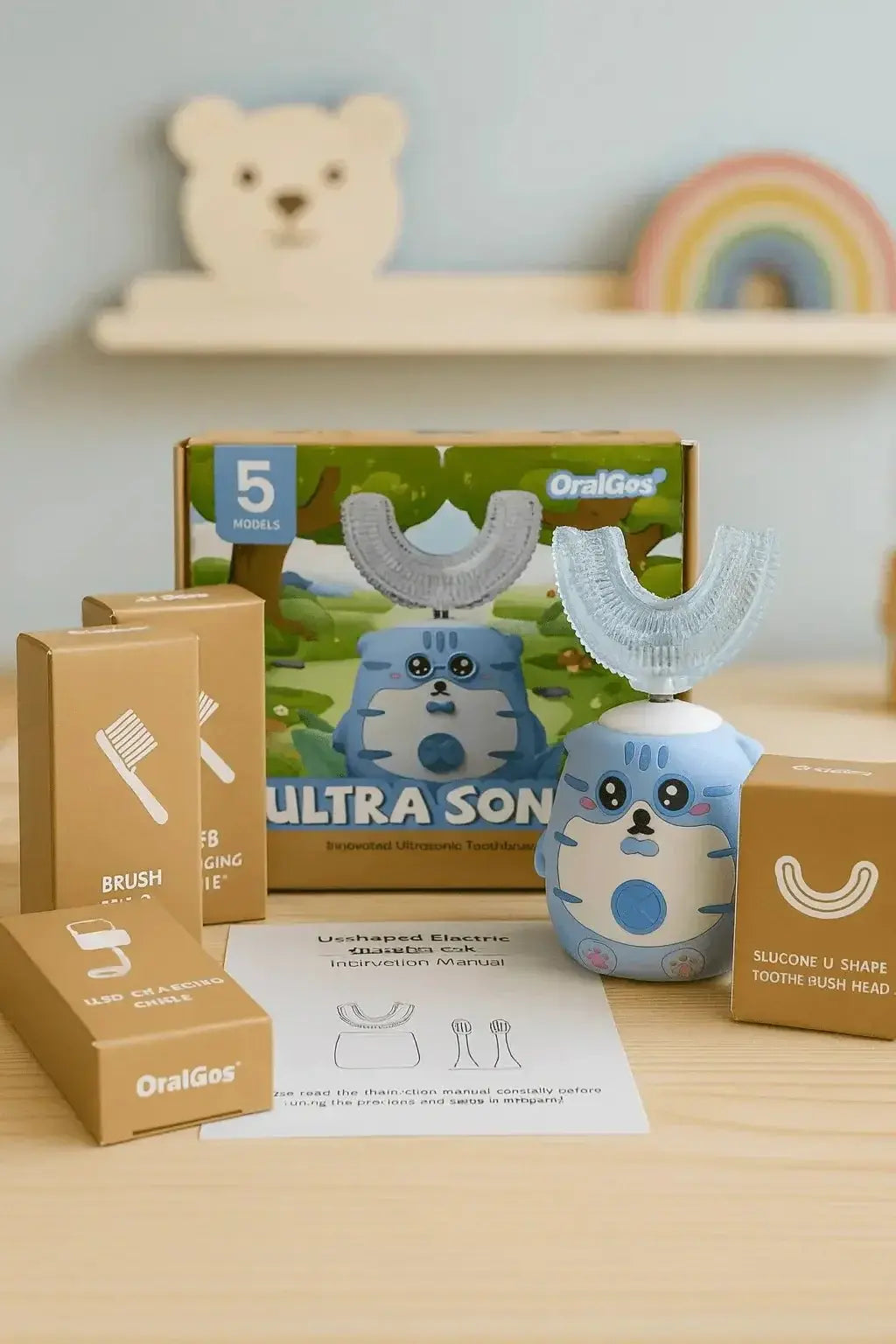
U-shaped kids toothbrushes simplify technique by placing a mouthpiece in the mouth and brushing many surfaces at once. They cover front, back, and biting surfaces simultaneously in a single cycle. They are popular for younger kids and for families trying to reduce daily battles.
Trade-off: performance depends heavily on fit, bristle quality, and whether the child uses it correctly. Mouth size varies a lot between ages 2 to 12, so choosing the right size matters.
A practical way to choose: if your child cannot reliably brush back molars and inner surfaces, a format that reduces technique requirements can be the difference between "sometimes" and "twice daily."
U-shaped toothbrush: is it worth it? The honest trade-offs
U-shaped brushes promise speed and simplicity. They can be a practical tool, but you should buy with clear expectations.
What it actually does well
- Reduces friction for younger kids who fight traditional brushing
- Covers multiple surfaces simultaneously, cutting technique demands
- Built-in timers enforce minimum brushing duration
- Can make the morning rush and bedtime routine genuinely faster
What it may miss
- Mouthpiece contact can be uneven if the fit is not right for your child's jaw
- Plaque at the gumline may need targeted standard brushing for thorough removal
- Kids who treat it like a toy and chew the mouthpiece get mixed results
Who should skip it
Kids with braces, permanent retainers, or orthodontic appliances usually need a brush that can work around brackets. Older kids who already brush well with a standard electric brush do not gain much from switching.
Marketing claims vs reality
"Cleans in 10 seconds" and "360-degree deep clean" are marketing. The real benefits are reduced friction and increased consistency. That is genuinely valuable for the right family, but do not expect it to replace all brushing supervision for a 3-year-old.
Materials and safety checks
Look for food-grade silicone that is BPA-free. Check that the mouthpiece attaches firmly and is easy to remove for cleaning. If the mouthpiece is hard to rinse thoroughly, it will accumulate residue over time. Basic water resistance is standard, but kids will dunk, drop, and rinse aggressively, so inspect seals and build quality.
In the UAE, products with Dubai Municipality approval provide an additional safety benchmark confirming materials are rated safe for children.
How to use a U-shaped toothbrush correctly
Buying a U-shaped brush is step one. Using it correctly is what actually delivers results. Follow this sequence:
- Choose the right size and check fit. Place the mouthpiece in your child's mouth before turning it on. It should sit comfortably without feeling too tight or too loose. If it gags them or does not contact back teeth, try a different size.
- Rinse the mouthpiece first. Run it under warm water to soften the silicone slightly. This also ensures bristles are clean before use.
- Apply the right amount of toothpaste. Use a rice-sized amount for under 3 or a pea-sized amount for ages 3 and up. Spread it across the bristle surface rather than placing a blob in one spot so it distributes evenly.
- Position before turning on. Have your child bite gently into the mouthpiece and center it before pressing the power button. This avoids the startle of sudden vibration and ensures alignment.
- Guide the motion. Most U-shaped brushes work best with a slight tilting motion, angling the mouthpiece to reach gumlines. The child does not need to move it aggressively, just keep it centered and let the brush do its job.
- Spit, rinse, and check. After the cycle ends, spit out excess toothpaste. Avoid heavy rinsing because it washes away fluoride. Do a quick visual check of the teeth. If back molars look like they were missed, run a short extra cycle with the mouthpiece positioned farther back, or use a regular brush on the last molars for 10 to 20 seconds.
Toddlers who "bite and run"
If your toddler chews the mouthpiece and walks away, set a clear expectation: "Bite softly until the buzzing stops." Give them a job to stay in place, like holding the rinse cup. Keep it under 90 seconds total to avoid meltdowns. Consistency beats perfection.
Gagging troubleshooting
Three common causes: too much toothpaste creating foam overflow, a mouthpiece that is too big for their mouth, or the child pushing it too far back. Fix in that order: reduce toothpaste first, then re-check sizing.
Cleaning and hygiene
Rinse the mouthpiece after every use and air-dry it upright. Wash with mild soap twice a week. If the mouthpiece is removable, clean the base connection point where residue collects. Replace the mouthpiece when the silicone turns cloudy, develops tears, or holds odor despite cleaning.
The features that actually matter
Product pages love big claims. Busy parents need a shorter filter. These are the specs that make a real difference in daily use.
Bristles: soft wins for kids
Soft bristles are the safest default for children. Kids tend to press too hard, especially when excited by a new gadget. Soft bristles reduce irritation while still cleaning effectively. If bristles look stiff or splay quickly, the material is too weak and you will replace heads more often.
Head size and fit
A brush can have perfect motor specs and still fail because the head is too big for a small mouth. If the head cannot comfortably reach back teeth, kids compensate by brushing only the front. For U-shaped styles, fit is even more critical. If it is too large, it will not contact teeth well. If too small, it feels tight and unpleasant.
Timer types: not all timers are equal
Look for a built-in two-minute timer or clear pacing cues. There are two main types: automatic shut-off timers that stop the brush after a set time, and interval or quadrant timers that buzz every 30 seconds to prompt switching areas. Quadrant timers teach better coverage habits. For kids who need more guidance, interval timing is the better choice. This is not optional for independence; it is the training wheels.
Pressure control
Some kids press hard. If your child's bristles flatten quickly or their gums look irritated, a brush with pressure alerts can help. Not a must-have for every family, but valuable if you are seeing signs of overbrushing.
Battery and charging
If you want a set-it-and-forget-it brush, prioritize long battery life and simple charging. USB charging is convenient for travel and for families who do not want another bulky base on the counter. A brush that dies every few days becomes a manual brush in disguise.
Noise and vibration
A brush that is technically great but feels too loud or intense will not be used consistently. If your child is sound-sensitive or resists the sensation, look for gentler modes and smoother vibration. Sometimes the "best" brush is simply the one your child does not hate.
Waterproofing
Basic splash resistance is standard but insufficient for how kids actually use things. They will run it under the tap, drop it in a wet sink, and rinse it aggressively. Check for IPX ratings and inspect seals before buying. A brush that dies from normal bathroom moisture is a waste of money.
App connectivity: nice, not necessary
Some brushes come with apps, coaching, and games. For certain kids, that is motivating. For others, it becomes one more thing to manage at bedtime. If you already limit screens in the routine, do not feel pressured to add an app just because it looks modern. A timer and a consistent habit beat a fancy dashboard.
How to choose by age
Age ranges on boxes are broad. Use them as a starting point, then adjust based on your child's size and skills.
Pre-teeth (0 to 12 months)
Before the first tooth erupts, wipe your infant's gums with a clean damp cloth after feeds. This gets them used to oral care as part of the routine and removes milk residue. Once the first tooth appears, switch to a soft infant brush with a rice-grain of fluoride toothpaste.
Ages 1 to 3: the toddler routine
At this stage, brushing is mostly training and tolerance. You are doing most of the work, and the goal is consistency.
Follow this sequence: wash hands, position toddler securely (on your lap, standing behind them at the mirror, or cradling their head), brush outer surfaces, then inner surfaces and chewing surfaces. Aim for the full two minutes but take what you can get. After brushing, have them spit without heavy rinsing to preserve fluoride on the teeth. No milk, juice, or snacks after bedtime brushing; water only.
Choose a very small head, ultra-soft bristles, and a brush that does not feel aggressive. If your toddler fights brushing, a U-shaped format can reduce the "hold still while I brush each tooth" struggle, but only if the mouthpiece fits comfortably.
First dental visit: schedule by the first birthday or within six months of the first tooth erupting. Go sooner if you notice white spots, brown areas, swelling, or pain.
Ages 4 to 6: the "I can do it!" phase
Kids want independence but their technique is incomplete. This is where electric toothbrushes shine because the motion is consistent even if their hand skills are not.
Prioritize a comfortable grip, a small head, and a timer. If your child rushes, you want pacing cues. If your child is resistant, you want something that makes brushing feel easier and faster. Foam toothpaste can help here because it spreads instantly into every crevice with zero mess, and kids who hate mint sting or thick paste texture accept the mild flavor more readily.
Ages 7 to 9: skills improve, but back teeth still get missed
Many kids can manage a standard kids electric brush well here. Focus on head size, bristle softness, and whether the brush encourages full-mouth coverage. Teach them to hold the brush at a 45-degree angle to the gumline, which is where plaque builds. If your child has orthodontic space maintainers or early braces, a brush with good maneuverability and gentle motion becomes more important.
Ages 10 to 12 and beyond
Older kids can often use smaller adult brush heads or advanced kids models. The decision should be based on mouth size, not age alone. If they are in braces or aligners, look for gentle but thorough cleaning and consider multiple modes (sensitive, daily clean) rather than one intense setting. The best pick here is usually the one they will keep using without reminders.
Signs the toothbrush is the wrong fit
Watch for these indicators that a brush is not right for your child: the head looks too large in their mouth, they cannot hold the handle comfortably, the vibration is too strong (they flinch or complain), gum soreness after use, or they still miss most surfaces even after practice. If you see these signs, do not push through. Switch brush type or size.
Building a kids dental care bundle
A good dental bundle makes the whole routine easier, not just the brushing part. The goal is to reduce decisions at the sink and make every step obvious.
What a bundle should include
- Electric toothbrush matched to your child's age and mouth size
- Toothpaste they will accept. Flavor and texture are the biggest compliance lever in the routine. If your child resists mint or gags on thick paste, switch to foam or a mild fruit flavor. This single change often fixes the entire morning battle.
- Replacement heads so you are not stuck mid-quarter with worn bristles
- A travel case for sleepovers, camps, and grandparent visits. Ventilated so it dries; compact so it actually gets packed.
What to skip
- Mouthwash: most kids under 6 cannot reliably swish and spit. It adds complexity without clear benefit at that age.
- Surprise toy add-ons: turning brushing into a prize negotiation trains the wrong behavior.
- Whitening products: wrong goal for kids. Focus on plaque removal and routine consistency.
Flossing tools
Start flossing when teeth are close together, which is less urgent when there are still gaps between teeth. Floss picks are more convenient than string for small hands, though some kids chew the picks. Introduce it as a simple extra step rather than a big deal.
Setup beats willpower
Keep the bundle visible, at kid height, with the toothbrush charged and toothpaste pre-loaded. If your child is resistant, change one thing at a time rather than overhauling the whole routine. The best bundle in the world fails if it lives in a drawer.
Replacement heads: when and how to replace them
The "every three months" rule is a starting point, not a hard limit. In practice, kids need replacements more often.
Replace immediately if you see these signs
- Bristles are splaying outward or have a permanent lean
- The motor sounds different (worn heads affect vibration transfer)
- The brush sprays more foam or feels different in the mouth
- Your child was sick (stomach bug, strep, cold sores)
Kids who need more frequent replacements
Under-6 chewers destroy heads faster. Kids with braces or space maintainers cause more wear because the head catches on hardware. Aggressive brushers flatten bristles within weeks. For these kids, plan on replacing every 6 to 8 weeks instead of 12.
U-shaped mouthpiece replacement
U-shaped heads deform over time from biting and twisting. Check two things: surface smoothness (look for tears or rough patches) and even fit (the mouthpiece should contact teeth consistently, not lean to one side). Cloudy or discolored silicone is another replacement signal.
Compatibility matters
If a replacement head does not click firmly, wobbles, or feels loose, it reduces cleaning power. Kids interpret this as "I don't like this toothbrush" when the actual problem is a bad head fit. Stick with heads designed for your specific brush model rather than the cheapest universal option.
Scheduling trick
Tie replacements to a calendar anchor: first week of January, April, July, October. This removes the guessing and catches the replacements your busy brain would otherwise forget. Buy a year's supply of replacement heads so you are never stuck with worn bristles.
The hidden cost of waiting too long
Worn heads clean less effectively at the gumline. Kids compensate by pressing harder. More pressure means more gum irritation. Irritation makes brushing unpleasant. The routine becomes a negotiation again. Replace on time and you avoid the entire cascade.
Braces, sensitive gums, and other special cases
A lot of buying advice ignores the kids who do not fit the average.
If your child has braces, prioritize gentle cleaning and access around brackets. A smaller head is helpful. Consistent motion plus good technique matters more than raw power. A brush that is too intense can make gums sore, which leads to skipping brushing, the opposite of what you want.
If your child has sensory sensitivities, start with the mildest mode and keep the first week simple. Let them hold the brush, turn it on near their hand, then touch a front tooth briefly. Comfort builds compliance.
If your child is cavity-prone, the brush is only half the plan. You still need consistent fluoride toothpaste use (appropriate amount for age), good coverage, and a routine that actually happens twice daily. Watch sugar and snacking patterns too: frequent sugar exposure through sipping juice over long periods is as damaging as total sugar amount. Each sip triggers a new acid attack on enamel. Water between meals should be the default drink.
Buying in the UAE: what to check
If you are shopping for a kids electric toothbrush in the UAE, these considerations save you from returns and disappointment:
- Dubai Municipality approval confirms the product meets local safety standards for children's products, including food-grade materials certification
- Return policy: confirm the retailer accepts returns if the brush does not fit your child's mouth. This matters especially for U-shaped brushes where sizing varies.
- Cash on delivery: many UAE parents prefer COD for first-time purchases from new brands
- Replacement head availability locally: a great brush with no local replacement stock becomes disposable. Check before you buy.
- Delivery speed: orders placed before 5 PM with UAE-based retailers often ship the same day
A quick checklist you can use in 60 seconds
When comparing options, do not get stuck in feature overload. The brush that wins on these points is usually a safe bet:
- The head or mouthpiece clearly fits your child's age and mouth size
- Bristles are soft and feel comfortable on gums
- There is a built-in timer or clear brushing cycle
- It is easy to hold for small hands and easy for parents to help with
- Charging and battery life match your household rhythm
- Replacement heads are available so you are not stuck later
- Materials are food-grade, BPA-free, and easy to clean
If a brush checks all of that, it is probably "best enough." That is the goal for busy families.
What parents get wrong when buying kids electric toothbrushes
The most common mistake is buying for your child's future self instead of their current self. A powerful brush with lots of modes sounds like a smart investment, but if it feels uncomfortable today, it will not get used.
Another mistake is assuming electric equals automatic. Kids still need coaching, especially on inner tooth surfaces and back molars. Electric motion helps, but it does not steer.
The third mistake is ignoring replacement heads. If you cannot replace the head easily, the brush becomes a short-term purchase. Worn bristles clean worse and can irritate gums.
The fourth mistake is fighting flavor battles. If your child refuses to brush, the toothpaste is often the culprit, not the toothbrush. Thick texture, strong mint, or foam overflow all create resistance. Sometimes switching to a mild foam toothpaste solves the problem overnight.
How to make any electric toothbrush work better
If you want immediate improvement without a total routine overhaul, focus on these habits:
Angle the bristles toward the gumline. This is where plaque builds, and kids naturally brush flat against the tooth.
Create a predictable order. Front top, front bottom, left side, right side, then the inner surfaces. Kids forget less when the sequence never changes.
Do a quick parent finishing pass at night. Even 20 seconds of help on inner surfaces can make a noticeable difference over weeks.
Make it a game for younger kids. Let them choose the brush color for ownership. Use the brush lights to "hunt for sugar bugs." Brush your own teeth alongside them. Kids who see brushing as a shared routine rather than a chore stick with it longer.
What should you buy for a confident, low-drama choice?
If your child is generally cooperative and old enough to follow simple instructions, a classic kids oscillating-rotating or sonic brush with a small head, soft bristles, and a timer is the most universally reliable option.
If your child is younger, resistant, or you are trying to make brushing feel faster and easier, a well-fitted U-shaped kids electric toothbrush can be a practical routine-saver, especially for morning rushes and bedtime battles.
If you want a complete system rather than a single product, a dental care bundle that includes the brush, toothpaste, and replacement heads removes decision fatigue and keeps the routine running without gaps.
If you are in the UAE and want a curated, tested option with fast delivery and cash-on-delivery, TipTop360 carries family-tested products with free delivery across all Emirates and a money-back guarantee.
The closing thought that matters most
"Best" is not about the fanciest motor or the cutest character on the handle. The best kids electric toothbrush is the one that fits your child's mouth, feels comfortable, and turns brushing into a routine you do not have to fight for twice a day.